Practical home repairs in Hastings and the stated Adams County service areaCall (402) 523-1344

Drywall Patch Repair in Hastings, NE

A patch should be sized to the damage, supported correctly, and left ready for the agreed finish. I handle ordinary holes, dents, anchor damage, doorknob impacts, and access openings after the source work is complete. Active leaks, widespread cracking, or unresolved movement need diagnosis before new compound hides the evidence.

Call directly
(402) 523-1344

Call (402) 523-1344 or use the homepage contact form with the property address, timing, photos, and access notes.

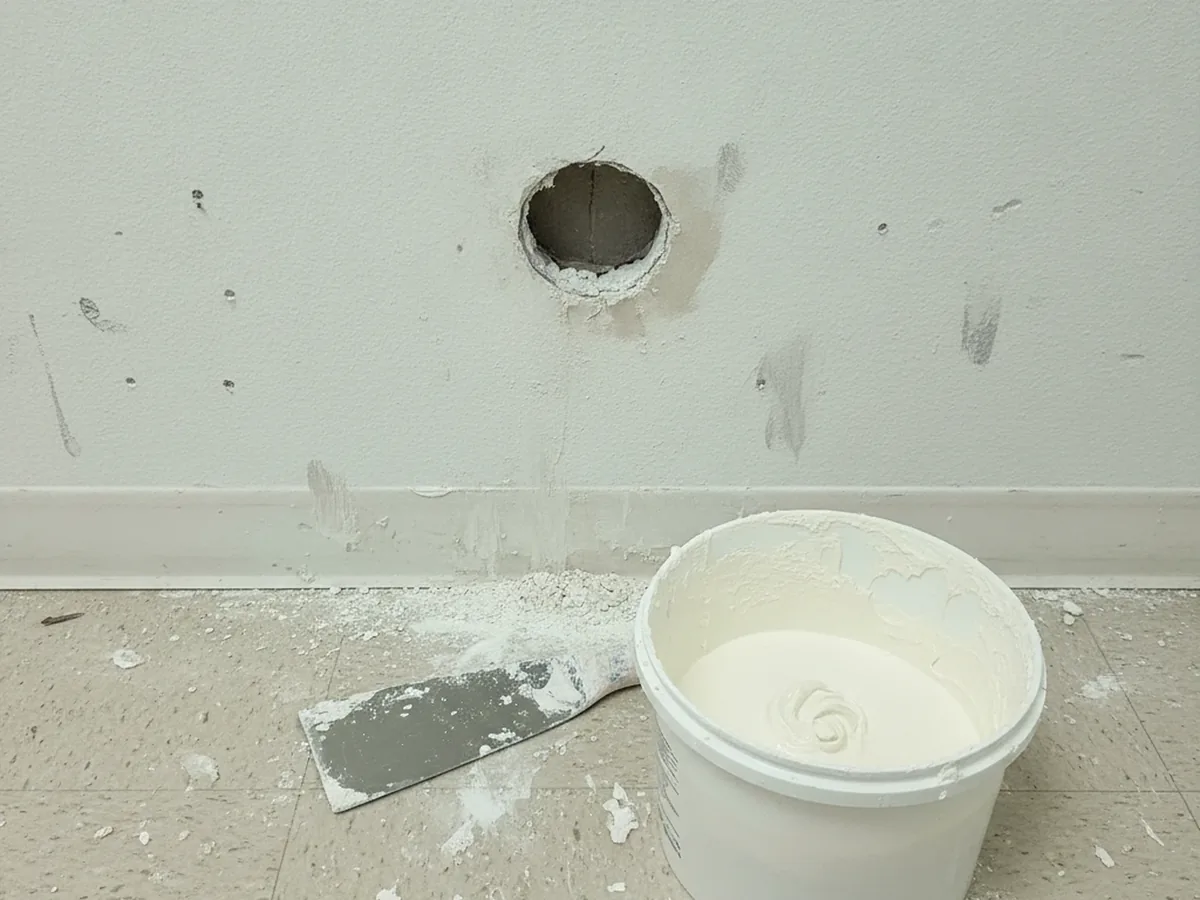
Ordinary drywall patch area in a Hastings Nebraska rental turnover

Confirm the damage has stopped

I ask why the opening exists and whether leak, plumbing, wiring, or movement work is complete. I need that history before cutting a neat rectangle, because the cleanest patch in Hastings is still wasted if water is entering or the framing continues to move. A plumber's or electrician's access opening should remain open until that trade confirms its work is finished.

Fresh compound should not hide damp board, recurring cracks, mold concerns, or an unfinished trade opening. Pressing fresh compound over soft paper hides evidence and weakens the edge. I look for firm board around the opening, dry material, and a stable source condition. Mold concerns, widespread cracking, and recurring dampness move the request out of routine patch work.

Show scale, backing, and wall texture

Photograph the entire wall, then add a ruler beside the damage and a side-lit view of texture. A coin or tape measure beside the hole provides scale; a full-wall photograph shows seams, corners, trim, and nearby obstacles. Both matter. A two-inch anchor tear and a two-foot cutout need different backing, coating, and sanding plans even if a close-up makes them look alike.

I need to see broken face paper, crushed gypsum, nearby seams, outlets, trim, and possible backing. Texture is easiest to read with light traveling across the wall rather than directly at it. Tell me whether the room has smooth board, orange peel, knockdown, or another finish, and whether matching paint exists. Texture blending and paint blending are separate expectations that should be named.

Build the patch in controlled stages

A sound patch may require cutting to stable board, adding backing, fastening, and applying more than one coat. Small damage may accept a supported insert; larger openings need deliberate backing and fastening into sound material. I remove loose face paper and crushed gypsum rather than building over it. The first coat establishes the repair, while later coats widen and soften the transition into the existing wall.

Each coat has a purpose; piling on wet compound to beat the clock can create shrinkage and poor sanding. Dust control starts before sanding. Move furniture when possible, identify supply and return vents, and protect nearby floors and trim. I use controlled sanding for the agreed finish, but no occupied-room process is literally dust-free. Sensitive belongings should leave the immediate work area.

Plan around compound drying time

Temperature, humidity, patch depth, and compound choice affect when sanding and another coat can begin. Setting compounds and premixed compounds behave differently, and a surface that feels firm may still need more drying before another coat or primer. Deep fills, cool rooms, and humidity can extend the sequence. I do not force wet material through sanding to meet an unrealistic same-visit expectation.

The $60-$140 single-patch and $220-$380 grouped-patch figures are planning bands, not promises of one-pass completion. A simple patch commonly plans at $60-$140. Several compatible locations may fit a $220-$380 half-day block, while broader lists use the published $58-$85 hourly or $420-$680 full-day structure. Size, backing, texture, protection, and the requested stopping point narrow that range.

Keep unresolved source work visible

Broad cracking, repeated movement, active moisture, and soft surrounding board need diagnosis before finish work. Diagonal cracks returning from a window corner, a ceiling stain that changes after rain, or board that yields under light pressure deserves investigation. Covering it can make later diagnosis harder. I leave the symptom visible and direct the source question to the appropriate building, roofing, or plumbing specialist.

I will not make evidence disappear merely to create a temporary paint-ready surface. Once source work is complete, send a photograph of the whole opening and tell me what material was removed. Pipes, wires, and framing near the cutout affect fastening locations. I do not probe blindly behind a wall merely because another trade left a convenient rectangular hole.

Define the finish before scheduling

Agree whether the stopping point is patched, sanded, texture-matched, primed, or painted. 'Paint-ready' should mean we agree on sanding and surface preparation, not that every lighting angle will make an old textured wall disappear. If primer, texture, or paint is included, identify the product and color responsibility. Existing paint may have aged differently even when the original can is available.

Move furniture, cover sensitive belongings, and tell me about occupied rooms or ventilation concerns before sanding begins. For a quote, send dimensions, room names, scale photos, side-lit texture views, and confirmation that leak or trade work is complete. Call (402) 523-1344 and mention furniture, vents, occupancy, and the date. I will plan coats and returns instead of promising every patch in one pass.
Drywall Patches questions

What does drywall patch work cost?

The published planning bands are $58-$85 per hour, $220-$380 for a half-day list of 4-6 compatible items, and $420-$680 for a full day. Hole dimensions, wall photographs, backing, room protection, coat sequence, texture, and finish narrow the patch figure. These figures are not final estimates for unseen work.

What should I send for a drywall patch estimate?

Send the Hastings address, a numbered list, wide and close photos, quantities or dimensions, known parts, access notes, and the date that matters. Mark the highest priorities. I use those details to size the work block, prepare for the actual property, and identify anything that belongs with another contractor.

Can several drywall patch items share one visit?

Yes, when the items are ordinary repairs that can share setup and be sequenced safely. Several patches share dust control, but wet board, movement, missing backing, or source-trade work can require another plan. I review each condition before assuming the entire list belongs in one block.

When should I schedule drywall patch work?

Call (402) 523-1344 before a turnover, inspection, seasonal change, or guest date compresses the available time. Describe furniture access, source-work status, texture, and every patch location. I will explain current fit and likely sequencing without promising an unsupported completion date or treating a partial photo as a final scope.

Can drywall patches be color-matched to existing paint?

Patching and priming can be included in ordinary scope. Exact paint matching depends on having the original paint, a reliable label, or a usable sample, and aged wall color may differ from a new batch. Mention the finish and available paint when sending photos so I can state clearly what the repair estimate includes.

Need help in Hastings?

Call directly or use the form with the address and project details. Leave the address, what needs attention, and any timing or access notes.

Free quote requests
Call (402) 523-1344
Call (402) 523-1344
Drywall Patch Repair in Hastings, NE | Holes and Damage